

How To Think Like an Investor (Part 3) - Get Yours and Keep Yours
Get Yours
There are very few asset classes that you can affect with your own efforts. Own Apple stock? Buying a new iPhone won’t push the price up. Own Bitcoin? Can’t do much to raise the value except hodl. Own US treasuries? Pay your taxes on time, I guess?
These are all passive investment vehicles, which certainly have their place in a portfolio. But if you have the smallest bit of drive and access to YouTube tutorials, you can juice returns by taking a more active role in asset appreciation.
Real estate is the easiest asset to appreciate through your own sweat equity. This mindset is especially helpful as you purchase your first primary residence. Looking at properties that have opportunities to add value (rather than turn-key or new build) will give your new investment a built-in upside that you wouldn’t otherwise be able to take advantage of.
Three ways to do that:
Renovation

The most surefire way to build equity through adding value to your property is through renovation. Buy an older home that has been neglected and fix it up. This strategy (my personal playbook) has spawned an entire cottage industry selling industrial-themed cottages. Even if you don’t have the means or skills to chipandjoanna a full-gut rehab project, taking small steps every year to improve your primary residence can have a huge return-on-investment.
Addition

sneaky addition
This is often added to a renovation project, and gives you the best bang for your buck. Have an unfinished basement, a two-car garage you don’t really need, or an unused spot in the backyard? Hello additional living space! Converting existing interior space is a very cash-efficient way to boost your home’s square footage. These projects do tend to bring more permitting requirements and regulatory scrutiny, so you do need to be prepared to ‘splain yourself to the city.
Additions are also often the lowest hanging fruit when it comes to hidden-in-plain-sight value. Just because an existing owner used their basement for storage, parked their car in the garage or piled leaves in the forgotten corner of their yard doesn’t mean that you have to! Spotting those opportunities in listings when the seller (and their agent) don’t is where you can walk into significant opportunities on the cheap.
Repositioning

This is the least-traveled path of value-add, but the same intuition that can unlock additional opportunities is useful here. Repositioning basically means taking a space that is utilized for a certain purpose and repurposing it for higher-value activities.
Examples:
Renting a single-family home out by-the-room to college students
Turning a long-term rental in a desirable location into a short-term rental
Renting out shop or garage space
Dividing a larger lot into smaller parcels for sale
The first three don’t technically add value to a property because they don’t change the inherent qualities of the property. But the change in use can dramatically increase the cash flow from a property, increasing its value to YOU.
These can often turn into repeatable strategies if you develop proficiency at any one of them, leading to more opportunities that others cannot see because they don’t see the property with YOUR experienced eyes.
Keep Yours

Now that you’ve gone through all of that hard work to identify and capitalize on strategies to add value to your property, how do you go about harnessing that value for future use?
Taxation
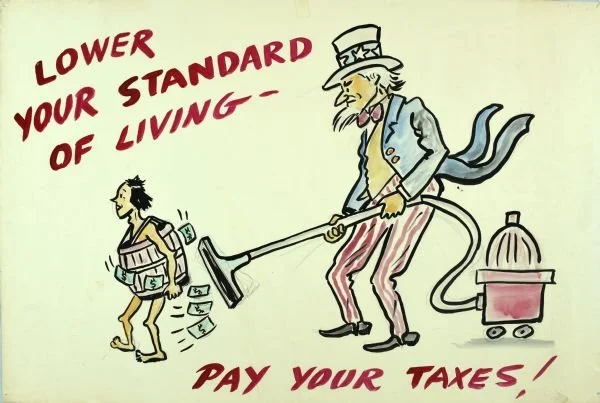
It’s no secret that owning a home can be expensive with regular maintenance and no landlord to call on. The good news is that your ol’ pal Uncle Sam understands this as well, and actively incentivizes homeownership through various deductions and tax breaks. Here are a number of expenses that you can write-off at the end of the year:
Mortgage interest - a not-insignificant amount, especially in the first ten years of ownership.
Legal fees for business purposes - if you own rentals
Mileage and travel - if you own out-of-town rentals
Advertising fees
HOA fees
Repairs
Maintenance costs
You will have to itemize your deductions in order to take advantage of these, but they can be significant enough to be worth the extra bookkeeping!
The other way that the gubmint incentivizes homeownership is through depreciation, which essentially acknowledges that your home will degrade over time, so the value of the home (not the land) can be written off over the course of 27.5 years. So if you have a $500k home (land value of $100k, structure value of $400k), you could lower your tax burden by $14,545 each year. An advanced strategy is to do a cost-segregation study and accelerate that depreciation into the first year you buy the home. That requires more in-depth work (and I am not a CPA) and is not open to everyone, but even the standard depreciation can offset a lot of income!
Future Leverage

As I mentioned in my first installment, the most important ingredient in building wealth through real estate is time. The value of your property will grow and the balance on your mortgage will decrease, giving you a growing pile of equity. Cool! But how do you best use that equity to grow the value of your portfolio?
If you are financially able, hold that property for the long-term. If it is your primary residence and you move to a bigger or better home, keep it as a rental and allow that equity growth to continue. You’ve likely passed the hardest years from an interest perspective, so your equity will grow in accelerating fashion, and cash flow will increase over time. Don’t be like this guy! If you need the money from your current home to buy the next home, consider either a cash-out refinance (if rates are comparable or favorable to when you bought), or a HELOC (if current rates are higher). As mentioned in my last newsletter:
A HELOC allows you to increase the liquidity of your home by allowing access to your equity if and when you might need it. Get one before you need it (you can even do a ‘piggyback HELOC’ when you buy the house, up to 90% LTV). Since you only pay interest on what you use, it’s a great tool to add needed flexibility for emergencies or opportunities.
If you must sell the property to take the next step, you can either take advantage of up to $500k in tax-free appreciation from the sale of a primary residence, or use a 1031 exchange to defer taxes on the sale of an investment property.
It is helpful to regularly evaluate your portfolio using my favorite metric (Return on Equity) and consider whether exchanging your property for something bigger or better is warranted.
For more ideas on how to approach portfolio growth, see my webinar about scaling: Going from One to Many.